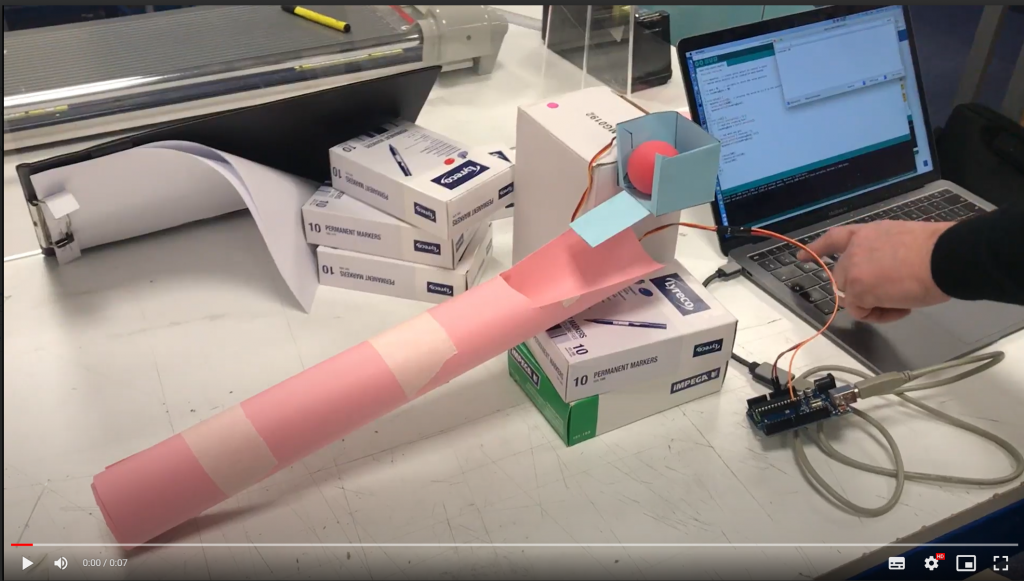
Today was the day—the official start of my journey into Creative Practice. It’s funny how, no matter how much you prepare, walking into a new space for the first time always brings that mix of excitement and nerves. I didn’t quite know what to expect, but as I entered the studio, I felt that this wasn’t going to be a typical “sit-and-listen” day. And I was right.
The Icebreaker: Who Am I as a Creative?
We started the day with an icebreaker activity designed to make us reflect on our creative identity. “Who are you as a creative?” the lecturer asked. Honestly, that question stopped me in my tracks. I thought about the art I’ve made, the code I’ve written, and the ideas that have sparked my curiosity, but I’d never consciously tried to define myself as a creative.
We were given a few minutes to jot down thoughts, and I found myself struggling. My ideas felt messy and scattered. I enjoy working with digital media, but I also love physical installations. I think of myself as someone who blurs boundaries—between mediums, between disciplines. But was that enough to call myself a creative? Maybe the answer would come over time.
Creating From Nothing: The Blank Canvas Exercise
Next, we were handed blank sheets of paper and asked to make something—anything—in just five minutes. No instructions, no prompts, just an open invitation to create. The idea was to see how we react to the pressure of starting from nothing, a situation most creatives will face countless times. I stared at the paper, unsure of what to do. Should I draw? Write? Fold the paper?
I ended up sketching a quick, abstract doodle that somehow felt chaotic and calm at the same time. It wasn’t profound, but it felt like an expression of the uncertainty I was experiencing. When we shared our pieces, I saw a range of responses—some had drawn intricate scenes, others had written poetry, and a few had used the paper to construct 3D forms. The diversity of approaches was inspiring and reassuring. There was no “right” answer, just different perspectives.
Learning to Collaborate
After a break, we were divided into small groups for a collaborative project. The brief was simple: “Create something together in one hour.” But the simplicity of the brief belied the complexity of actually working together with people we’d just met. We had to quickly get to know each other’s strengths and creative preferences.
Our group decided to blend visual art with sound. One of us sketched while another played around with digital audio software to create an atmospheric soundscape. I contributed by helping merge the visuals and sound, thinking about how they might interact with one another. It was an intense, fast-paced session, but it felt rewarding to see how, with no clear plan, we created something cohesive by the end.
What I learned from this is that creativity is often about trust—trusting the process, your ideas, and your collaborators. Sometimes, you just have to dive in and see where things take you.